杀生
书名:野猪大改造|作者:笑无语|本书类别:古言|更新时间:04:41:03|字数:3896字
一 |
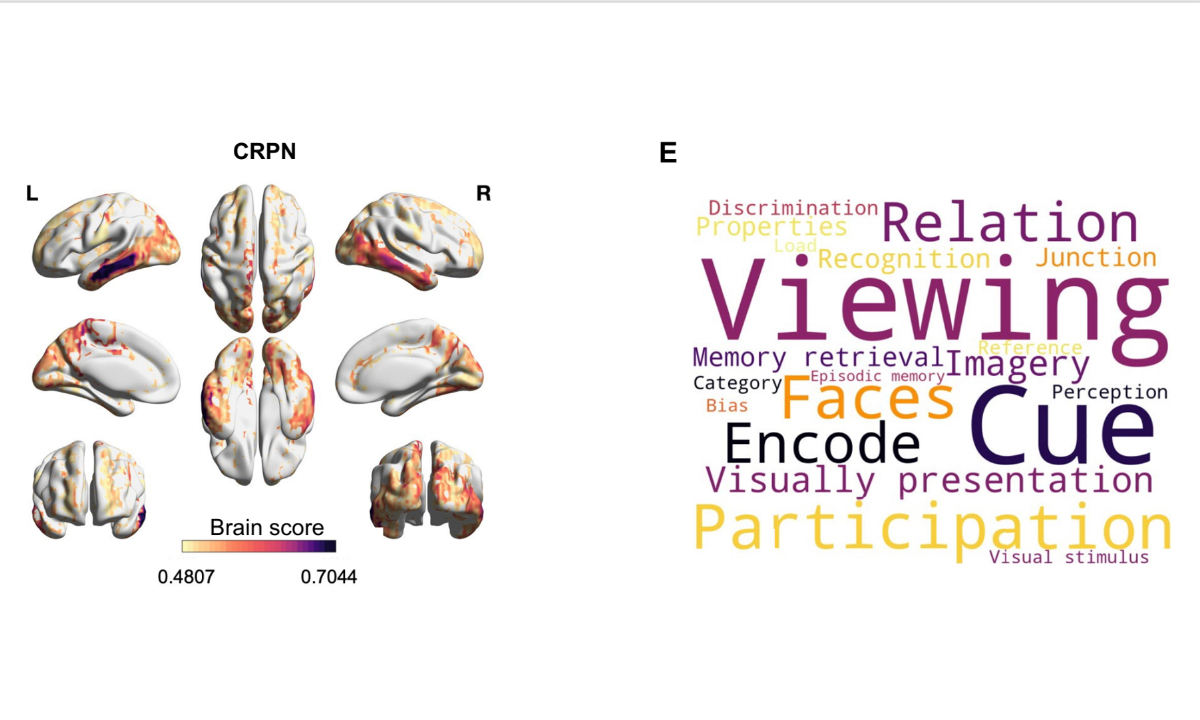
Chinese scientists have developed a “brain-reading” AI model that could help predict the risk of depression among adolescents up to four years in advance by analyzing how humans respond to facial expressions, a technology expected to inspire future development of embodied intelligent humanoids capable of perceiving human emotion and thoughts through nuanced facial cues.
WHO data show that around 332 million people worldwide have depression, about one-third of whom have treatment-resistant forms of the condition. In China, an estimated 95 million people suffer from depression, National Business Daily reported, citing statistics from the China Mental Health Survey.
Using data from a population-based longitudinal adolescent cohort recruited across several European countries, the research team led by Lu Han, assistant professor at the School of Artificial Intelligence, Shenzhen University, has built an AI model that predicted which 19-year-olds were more likely to develop depression at the age of 23. The predictions were backed up by an independent clinical cohort of individuals with depression. The team’s paper was published in the journal Science Advances this month.
According to Lu, the study used brain scans taken at age 19 to predict depression-related symptoms at age 23. The study focuses on adolescence because the transition from adolescence to early adulthood is a key developmental period when depressive symptoms can increase rapidly. The earlier risks are identified, the greater the opportunity for prevention, Lu told the Global Times on Monday, adding that the findings need to be further validated in middle-aged and older adults and across different ethnic groups in future research.
In this study, the researchers analyzed data from adolescents in the IMAGEN, a population-based longitudinal cohort recruited across several European countries. At age 19, participants underwent an fMRI emotional-face task, and their emotional symptoms were assessed using standardized questionnaires. Genetic data obtained from blood samples were also analyzed, and participants were followed up at age 23. The researchers examined whether neural representations of angry faces at age 19 were associated with emotional symptoms and could predict elevated emotional symptoms four years later.
According to Lu, people without depression can more easily distinguish emotional changes based on others’ facial expressions and respond accordingly – for example, responding with friendliness to a smiling expression. But people with depression cannot do this, and are more likely to assume people are angry with them.
A brain-aligned deep-learning model developed by Lu’s team suggested that those participants whose brains were less able to distinguish between different facial emotions and tended to perceive others as angry were more likely to develop symptoms of depression and anxiety in adulthood.
The hypothesis that adolescents at risk of depression may respond differently to other people’s facial expressions than those without such risk based on the negative information processing bias long observed in depression research: people at risk of depression are more likely to notice, interpret, or remember negative social information, Lu said.
The researchers focused on angry facial expressions because they signal social threat and rejection, which are closely linked to interpersonal difficulties and negativity bias associated with depression. They hope to further understand how this bias develops within the visual system.
Building on this, they created a deep learning model, which mimics how the brain processes visual information, to predict how the brain encodes abstract emotional concepts such as anger.
They found that 19-year-olds whose response to facial expressions was skewed in favour of negative emotions or memories were the most likely to develop some form of depression.
Based on these findings, Lu’s team then developed a marker that can identify possible warning signs.
According to Lu, the study found that the computational biomarker was linked to the depression-related variant rs11123030 and polygenic risk for depression, suggesting that genetic susceptibility may affect emotional perception. It also provided predictive information beyond family stress and socioeconomic factors, complementing rather than replacing environmental risk factors. Therefore, depression is neither purely genetic nor purely psychological, but a complex mental disorder arising from the interplay of genetic susceptibility, brain development, emotional and cognitive processes, and life experiences.
According to Lu, the study is also expected to advance AI by aligning deep neural networks with human brain activity and using parameter perturbations to probe neural mechanisms, allowing models to both predict and explain how biases may arise.
The findings suggest that future affective computing and embodied AI should go beyond simply labeling facial expressions, incorporating visual details while preventing prior assumptions from overriding real-time sensory input, Lu said, adding that the findings could provide valuable insights for developing more interpretable robotic perception systems that more closely emulate the way humans process emotions.
。 北京8月23日电 题:破题具身智能“数据荒” 北京中关村机器人“训练基地”揭秘 作者 牛琳 裴拓 覃纤睿 祝亦奕 在中关村(海淀)具身智能创新产业园·诺亦腾机器人跨本体数采训练中心(以下简称“数采训练中心”)的商超标准货架空间,工作人员佩戴VR眼镜,手握操控手柄,遥控机器人完成从货架上抓取货物等动作。 “抓握成功后,后台模型会记录本次操作的力度和关节角度。”诺亦腾机器人科技(北京)有限公司(以下简称“诺亦腾机器人”)高级技术经理冯劼说,积累足够多的动作样本,才会消除力度、角度等差异带来的误差,从而形成有效数据。 作为全国首家以“具身智能”命名的特色产业园,中关村(海淀)具身智能创新产业园与诺亦腾机器人合作,依托诺亦腾机器人在人本数据采集、多模态感知、跨本体遥操作及机器人数据生产等领域的技术积累,联合共建了机器人跨本体数据采集训练中心,为具身智能等相关企业提供真实场景下的数据采集和训练服务。7月28日,中关村(海淀)具身智能创新产业园·诺亦腾机器人跨本体数采训练中心内,技术人员正在调试机器人。 覃纤睿 摄 数采训练中心堪称一座机器人“训练基地”,在这里,家居、商超、工厂、办公等场景被一比一复刻,机器人在工作人员手把手教授下,学习真实世界的劳作方式。在此过程中,依托高精度的数据采集系统,真实场景中的姿态、力度、轨迹等动作数据被敏锐捕捉并记录下来,之后这些数据被转化为机器人学习人类技能的“养料”。 “机器人的每一次自主识别、判断与操作,都依赖数据收集、算法训练、模型部署与场景验证。”诺亦腾机器人售前技术支持胡同杰表示,优质数据集的积累是整个行业持续发展的根基。 在数采训练中心,除真机遥控外,数据采集还采用不依赖机器人本体的采集方式。工作人员头戴轻量化相机,经由光学摄像头追踪动捕服上的标记点,同时由惯性传感器记录身体各部位的转动与加速度,将人的视野、动作及交互习惯转化为机器人可识别的“数据课本”。

二 | 针对精细任务,数采训练中心设有高精度光学动捕笼式空间,内置20余台400万像素红外摄像头,工作波长850纳米,精度达到亚毫米级。

三 | 配套手套上嵌有3毫米标记点与压力传感器。

四 | “戴上手套,就相当于有了人手的运动信息。”冯劼解释道,在抓放、翻折物体的过程中,系统同步记录手指的弯曲角度、接触位置和抓握力度,并配合第一视角和第三视角视频,将多源数据时码对齐,完整还原人手与物体交互的过程。

五 | 冯劼说,不同任务的训练要求不尽相同。简单的动作,通常需要3天至5天的数据采集;舞蹈、武术等高难度动作,则需专业人士到场反复示范,周期可达数周乃至数月;而高精度人手交互数据,则采集难度更高。 “目前,具身智能产业发展面临‘数据荒’。

六 | ”冯劼说,中国在机器人本体方面已具备较强制造能力,下一阶段的突破将更多集中于模型端,而“模型的上限,取决于数据的质量与规模”。

七 | 胡同杰也表示,具身智能的应用方向正在从工业场景逐渐向民用和商用领域扩展,数据正成为制约具身智能泛化能力突破和规模化落地的核心瓶颈。

八 | “真正有价值的数据不应长期依赖人工搭建的场景。”胡同杰说,未来会出现更简易的数据收集设备,数据采集将走进真实工作与生活场景。


